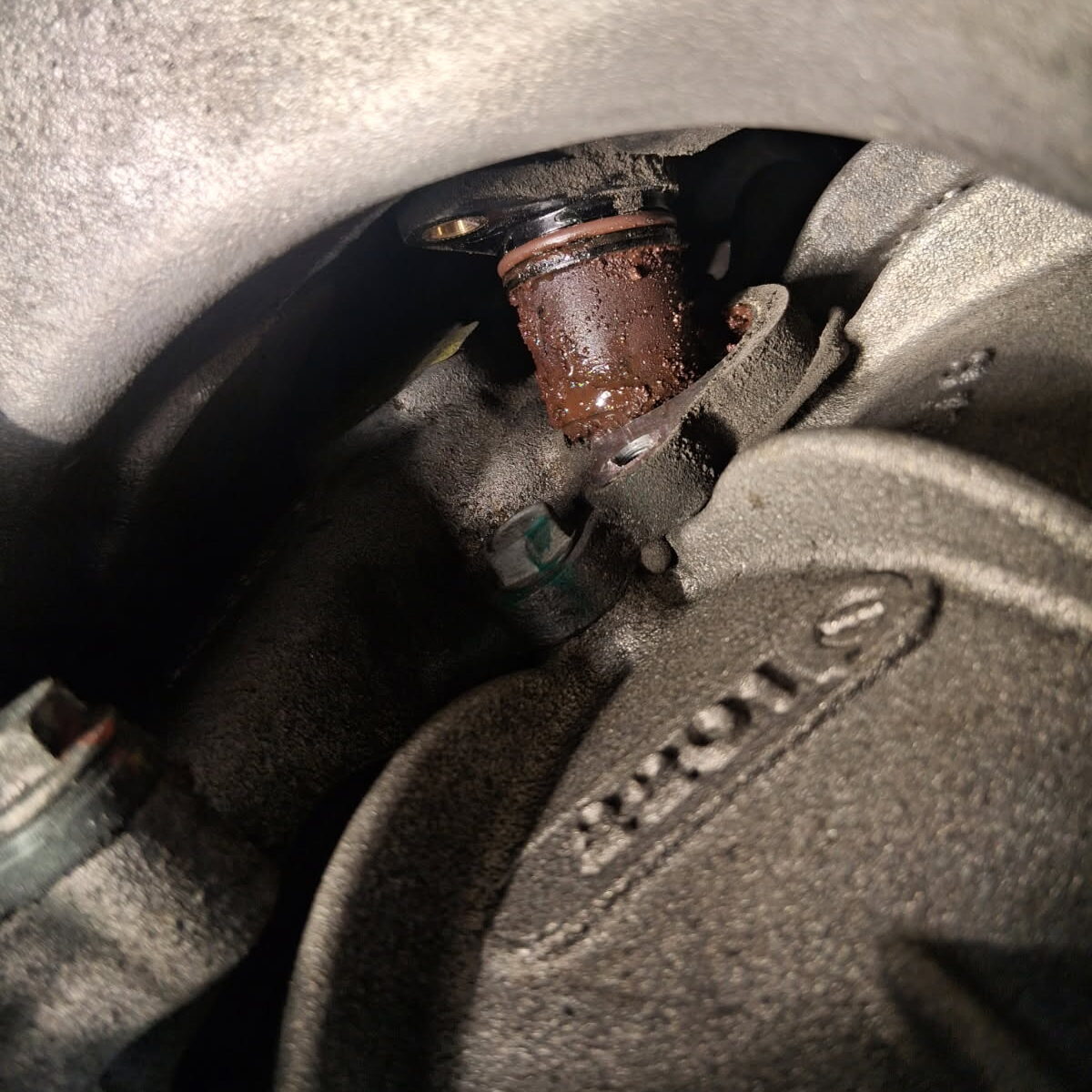
The Tesla Large Drive Unit (LDU) in specific Tesla models has earned a reputation for one significant drawback: a faulty rotor coolant seal known to fail over time. Bad leaks are often identified with a very wet speed sensor and or rusty speed sensors.
see below for a bad speed sensor:
The Consequences of an Tesla LDU Coolant Leak in Your Tesla
The Tesla LDU cooling system in motors prior to version U uses a seal to prevent coolant from leaking into the motor on the rotor. Over time, this seal can wear down or fail due to thermal cycling, age, or manufacturing limitations. We have seen these seals fail within days on some motors and years on others. This seal, while it can be replaced, is not the easiest feat. The Tesla LDU seal will always leak eventually and they wear on the rotor shaft causing the cooling passage to be potentially unsealable.
When coolant begins leaking, the leak will eventually short out the stator, can destroy the electronics in the inverter, and can seize and rust the rotor, leading to total motor failure. While Tesla has revised its newer models, over a decade of knowledge of this issue with the addition of the “U” variant. However vehicles without a version U motor or coolant deleted motor still has the original design flaw.
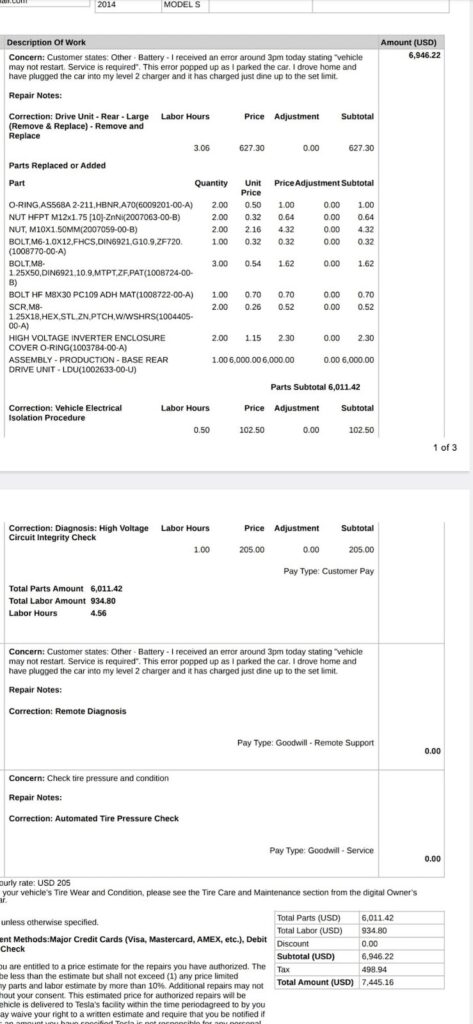
When this happens, coolant begins leaking into the motor, causing damage that can cost you up to $7,000 for a replacement Tesla Large Drive Unit.
Reference: https://teslamotorsclub.com/tmc/posts/7914055/
We designed a coolant delete bypass kit that offers a practical fix for this issue, addressing the root cause before more significant problems arise. If the Tesla LDU has not already been leaking our LDU delete kit will remove any possibility of Tesla LDU rotor seal failure in the future.
Fancy pic of our delete kit goes here
Designed for Tesla Model S and X vehicles, as well as Toyota RAV4 EVs and B-Class ED / B250e, this lightweight, anodized aluminum product offers a dependable way to safeguard your tesla motor for the known rotor seal issue.
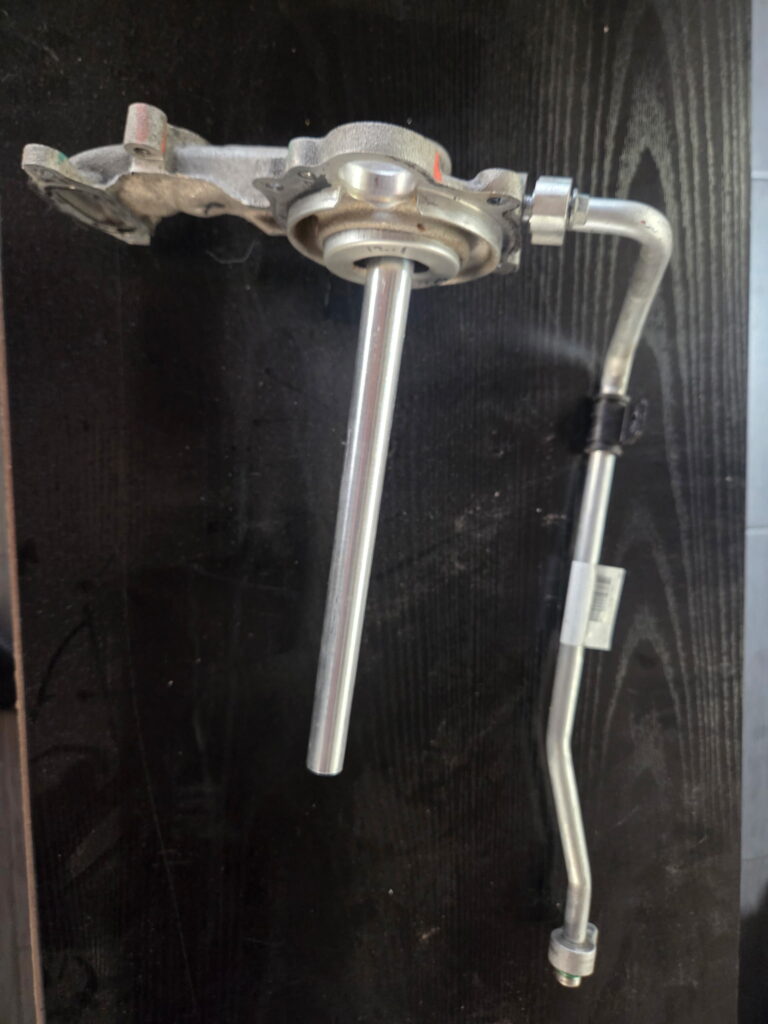
Our kit is similar to how Tesla’s Rev U motor solved the leaking issue by by-passing coolant going into the rotor. Below are pictures of Tesla’s updated manifold we removed.
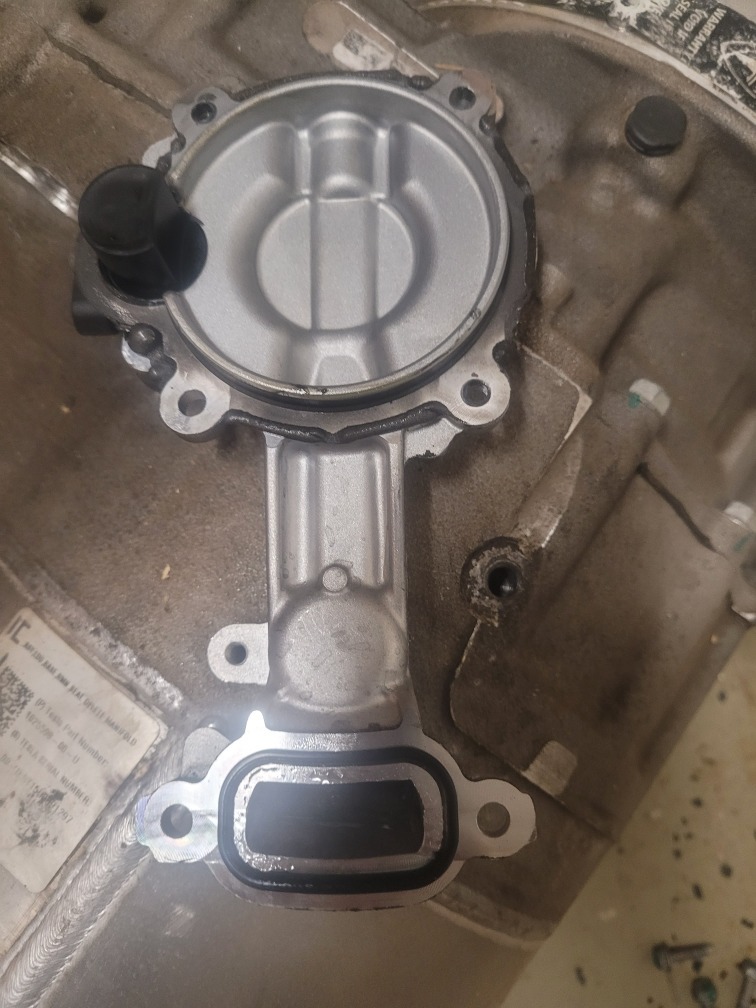
Prior to version U the manifold looked like this:
A Cost-Effective Solution
The Large Drive Unit (LDU) coolant delete bypass is a simple, cost-effective way to prevent a well-documented problem that has affected many Tesla RWD and Performance S and X, RAV4 EV, and Mercedes B220 owners. By addressing the coolant seal leak directly, this product helps extend your motor’s lifespan and avoids costly repairs.
How Our LDU Coolant Delete Bypass Solves the Issue
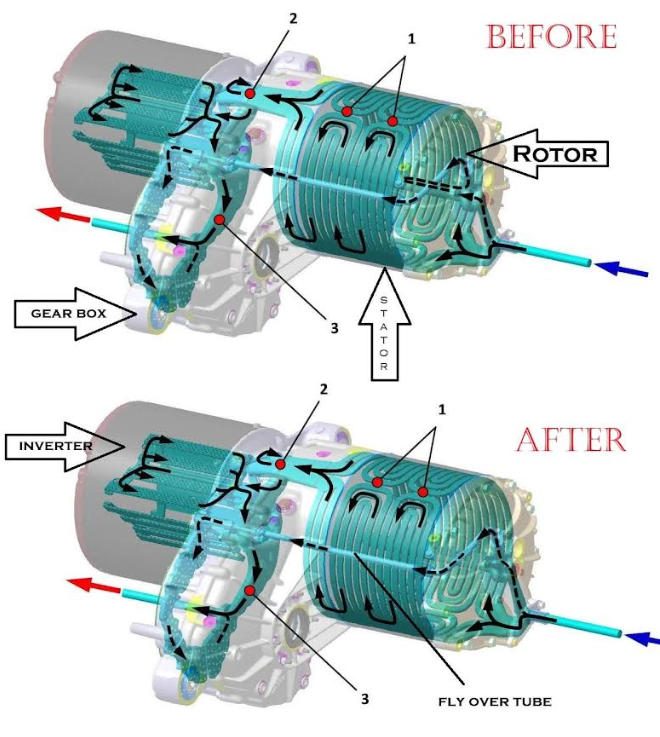
Our LDU coolant delete removes the cooling passage into the rotor, bypassing the area where the factory seal commonly fails, effectively preventing any coolant leaks into the motor from the rotor. The following picture from XXXXXX shows the change in coolant flow of revision U, blue arrow is where coolant enters, red arrow is the hot coolant leaving the motor. Our modification follows the same flow.
Other key features of our product include:
- Lightweight anodized aluminum construction: This material offers durability without adding unnecessary weight.
- Two-piece design: Simplifies installation and maintenance compared to bulkier alternatives.
- Gearbox cooling/heating: We keep the coolant passage for the Gearbox in place, unlike some of our competitors. Commonly referred to as the flyover tube.
- Reduced coolant air bubbles: Many competitors kits remove the gearbox passage creating an air bubble that can slowly work its way out of the motor possibly causing a low coolant condition/warning.
Our product focuses on addressing a specific problem without introducing new risks or performance trade-offs.
Why Tesla LDU Preventative Maintenance is Important
Once coolant leaks into the motor, the damage is expensive to repair.
Addressing the issue early with a coolant bypass avoids these complications entirely.
Symptoms of potential seal failure include:
- Shuttering of the motor.
- Visible signs of coolant on the speed sensor. (see how to check your speed sensor)
- Error codes
- Motor failure
- The vehicle falls within the known affected models. (2012-2020 Tesla Model S RWD and Performance, 2013-2020 Tesla Model X Performance, 2012-2014 Toyota Rav 4 EV, 2014-2017 Mercedes B class EV.) See full list of affected models.
- PDRN indicator turning red
If you’re experiencing any of these issues, it’s essential to perform preventative maintenance promptly before any signs of leakage occur. While our coolant bypass prevents future problems, it cannot reverse damage already done.
We do not recommend in place deleting as coolant may still be in the motor and eventually causing issues.
For other preventative or common maintenance needs for Teslas see our “common tesla issues” page
Preparation for Coolant Delete
Prior to beginning a delete we inspect the speed sensor for coolant, the inverter side for condensation and coolant. We do a short drive to listen for bearing and gear noise. Once we find the sensor clean and motor noise free we can begin the coolant delete process.
How Our Product Compares to Competitors
Existing Tesla LDU coolant delete solutions are available, but many are bulky, overly complex, or challenging to install. Our product is streamlined for practicality.
Its lightweight design reduces unnecessary material use, and its two-piece construction makes it easier to install without requiring extensive vehicle modifications.
Lastly, our product is wholly manufactured in the United States.
Non-Invasive fix
While installing the Coolant delete kit is a time consuming effort it is a non-invasive approach to prevent a motor failing. See the full install procedure here. (link to the install instructions)
While you’re at it.
For Tesla Owners, when the coolant delete kit is used in conjunction with an N2itive control arm kit it can greatly expand the lifespan of your Tesla Model S or X, save on costs of install and save on tire wear costs to minimize cost of long term Tesla driving. ( See N2itive kits)
There are several things that may become a “while you’re at it” during the coolant delete process, as they are common issues. Likewise, if you are experiencing any of these issues and have not had a coolant delete, we would recommend having a coolant delete done if you are servicing any of these issues.
subframe mount broken (see sub frame mount)
motor bushings going bad (see motor bushings)
What’s included.
Whenever we install a coolant delete the following is included in the service.
- Axle greasing: since the axles have to be removed from the vehicle it is important to grease them to ensure a long life and no noise coming from the axles. Often Tesla’s at stoplights and parking lots will have an audible click as the car stops or changes direction. This is a very common occurrence and a maintenance issue we recommend doing every few years.
- Axle Seals: as we remove the axles while removing the Tesla LDU from the vehicle we replace the axles seals to ensure no leaks are present when reinstalled into the vehicle. Watch for red/brown/or golden drips where you leave your car parked. Often the leak is very slow and does not necessarily leave a trace on the ground. The trace is easily seen on the drive unit and collects lots of road grime. (see axel seals)
- Differential drain and fill: Tesla does not have a specific time frame onto which the transmission fluid in the drive unit should be replaced. However, fluids do break down and get dirty over time. We drain and fill the Tesla LDU with fresh fluid to ensure a longer drivetrain lifespan.
- Alignment: since the subframe is removed from the vehicle we perform a 4 wheel alignment after the install is complete.
List of affected cars:
All 2012 Tesla S
All 2013 Tesla S
2014 Tesla S60, S85 , P85, P85D, P85D
2015 Tesla S60, S70, S85 , P85, P85D, P85D, P90D, Tesla X P90D, P90D
2016 Tesla S60, S70, S75, S85, P90D, P90D, P100D, P100D, Tesla X P90D, P90D, P100D, P100D
2017 Tesla S60, S75, P100D, P100D Tesla X P100D, P100D
2018 Tesla S and X P100D, P100D
2019 Tesla S and X P100D, P100D2020 Tesla S and X P100D, P100D